
Showing 1–24 of 153 resultsSorted by price: low to high








Showing 1–24 of 153 resultsSorted by price: low to high
Commercial Chest Freezer FAQs
What is the difference between a chest freezer and an upright freezer?
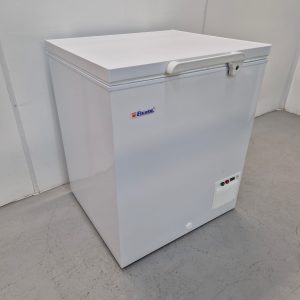
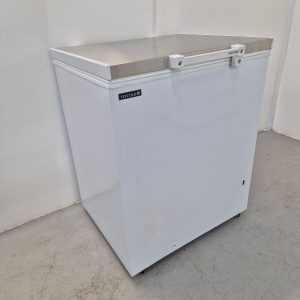
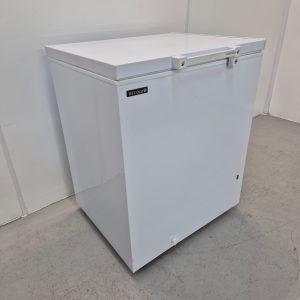
A chest freezer opens at the top with a lid and holds more per cubic metre, which makes it cheaper to run. An upright freezer opens at the front with shelves and uses less floor space. Chest freezers suit bulk storage, uprights suit busy access kitchens.
What temperature do commercial chest freezers maintain?
UK commercial chest freezers operate at minus 18°C to minus 22°C, which is the standard for safe frozen food storage. Most H2 chest freezers have a digital temperature display and an alarm if the temperature rises above the safe range.
How energy efficient are commercial chest freezers?
Chest freezers are typically 10 to 20% more energy efficient than uprights of similar capacity because cold air sinks and stays in the unit when the lid opens. Look for an A or B energy rating to minimise running costs over the freezer’s life.
What capacity chest freezer do I need?
For a small café, 200 to 300 litres is enough. Pubs and restaurants typically need 400 to 600 litres. Large catering operations, butchers, and ice cream parlours use 800 to 1,500 litre chest freezers. Allow 1 cubic foot per main meal of frozen stock.
Are chest freezers suitable for ice cream storage?
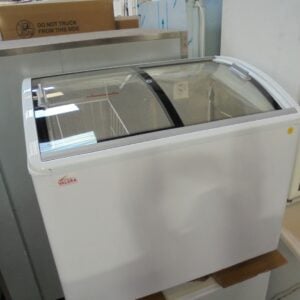
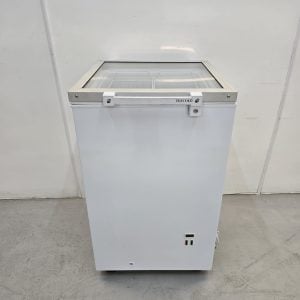
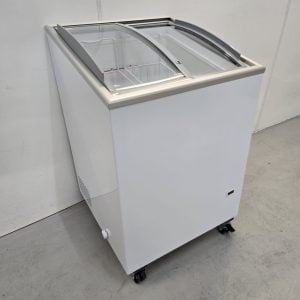
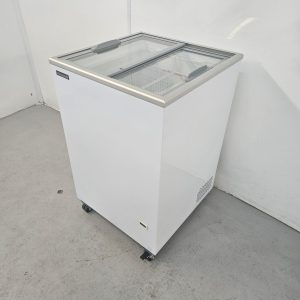
Yes, and they are the preferred option. Chest freezers maintain a stable lower temperature better than uprights, which keeps ice cream firm and prevents freezer burn. Many H2 chest freezers come with sliding glass tops for ice cream display in shops.
Do commercial chest freezers come with locks?
Most do. Lockable lids prevent stock theft and accidental opening overnight, which protects stock value and saves energy. Some H2 chest freezers also include castors, drain plugs for defrosting, and adjustable feet for uneven floors.


