
£24 billion. That’s the size of the UK food-to-go market in 2025. And right now, three out of four convenience stores aren’t getting a slice of it.
The numbers are hard to ignore
The UK food-to-go market is worth £24 billion and growing at 3.3% a year. Convenience stores are one of the fastest-growing channels for grab-and-go food, but according to industry data, only around one in four independent shops offers any kind of hot food.
That gap is an opportunity. Hot food-to-go generates an average basket value of £5.61, compared to £4.73 for chilled food. That’s a 19% uplift, every single transaction. And the margins are even better: proprietary hot food in a convenience store can deliver gross margins of 60% to 100%, according to the Association of Convenience Stores.
A heated display cabinet from H2 Catering Equipment starts at £225+VAT. At those margins, it can pay for itself in under three weeks.
Why hot food changes the whole equation
ACS and IGD data shows a clear pattern: customers who buy hot food spend more overall. The average basket value tells the story.
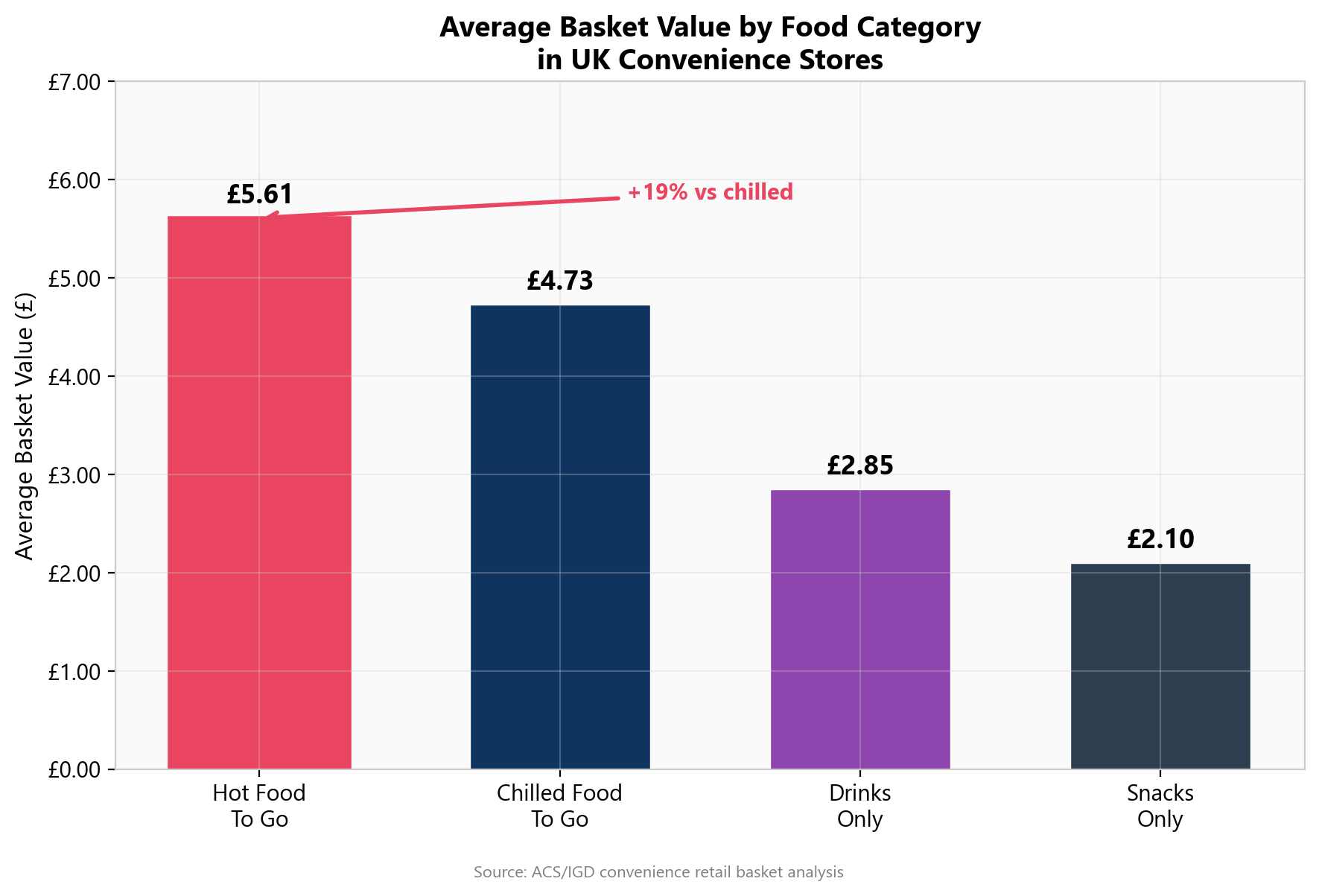
A customer who comes in for a hot pie and a drink spends £5.61 on average. The same customer buying a chilled sandwich spends £4.73. But the customer just buying a bag of crisps and a bottle of water? £2.10. Hot food pulls people in and keeps them spending.
Three concepts, three profit models
Not every newsagent wants to run a full kitchen. You don’t need to. The three most common hot food-to-go models for convenience stores are pies and pasties, hot sandwiches, and soup with wraps. Each has different margins, different equipment needs, and different daily volumes.
We modelled the weekly revenue and gross profit for each concept, based on realistic footfall for a typical newsagent selling six days a week.
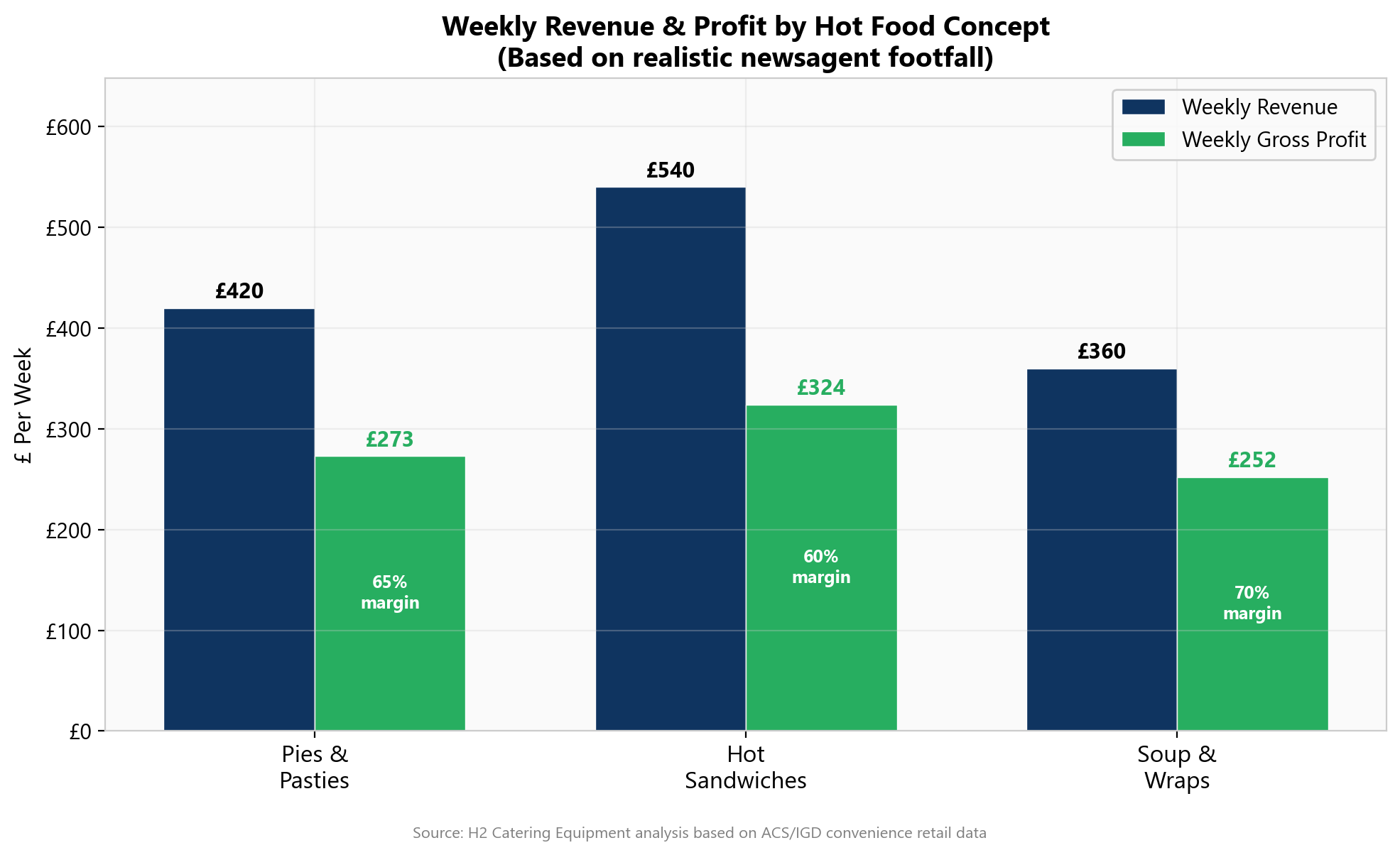
Pies and pasties are the easiest entry point. You buy them pre-made from a wholesaler, heat them, and display them. At 25 items a day at £2.80 each, that’s £420 a week in revenue and £273 in gross profit. The food cost is around 35% because you’re buying in ready-made product.
Hot sandwiches are more work but the margins improve. Twenty items a day at £4.50 each gives you £540 in weekly revenue. With a 60% gross margin, that’s £324 a week in profit.
Soup and wraps is a strong winter model. Fifteen portions a day at £4.00 each, with a 70% gross margin on homemade soup, delivers £360 in weekly revenue and £252 in profit.
The payback question: how fast does this equipment earn its money back?
The biggest barrier for most newsagent owners isn’t the ongoing revenue. It’s the upfront cost. So we calculated the payback period for five different heated display cabinets from H2‘s range, using conservative profit estimates.
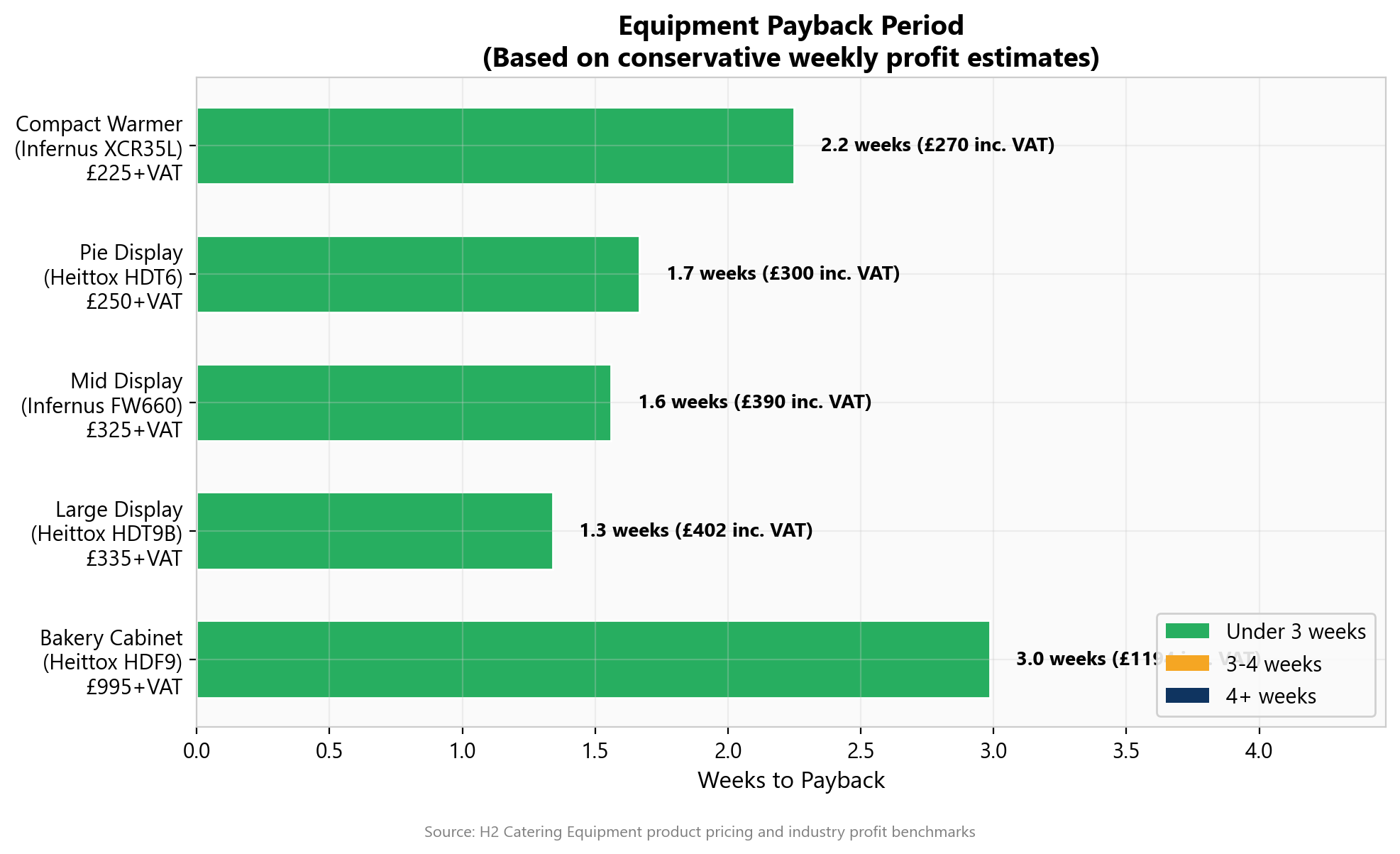
The entry-level Infernus XCR35L at £225+VAT (£270 inc. VAT) pays for itself in 2.3 weeks. A mid-range Heittox HDT6 pie display at £250+VAT (£300 inc. VAT) takes 1.7 weeks. Even the larger Heittox Bakery Cabinet at £995+VAT takes under three weeks if you’re generating £400 a week in gross profit from it.
Compare that to almost any other investment a small shop owner can make. A new shopfront costs thousands and takes months to show returns. A heated display generates cash from day one.
The full-year picture (including seasonality)
Hot food isn’t a flat market. Sales are seasonal. Colder months drive more demand for pies, pasties, and soup. Summer is quieter. We modelled a full 12-month projection for a mid-range setup (Heittox 100L at £275+VAT) with seasonal adjustments based on ACS retail data.
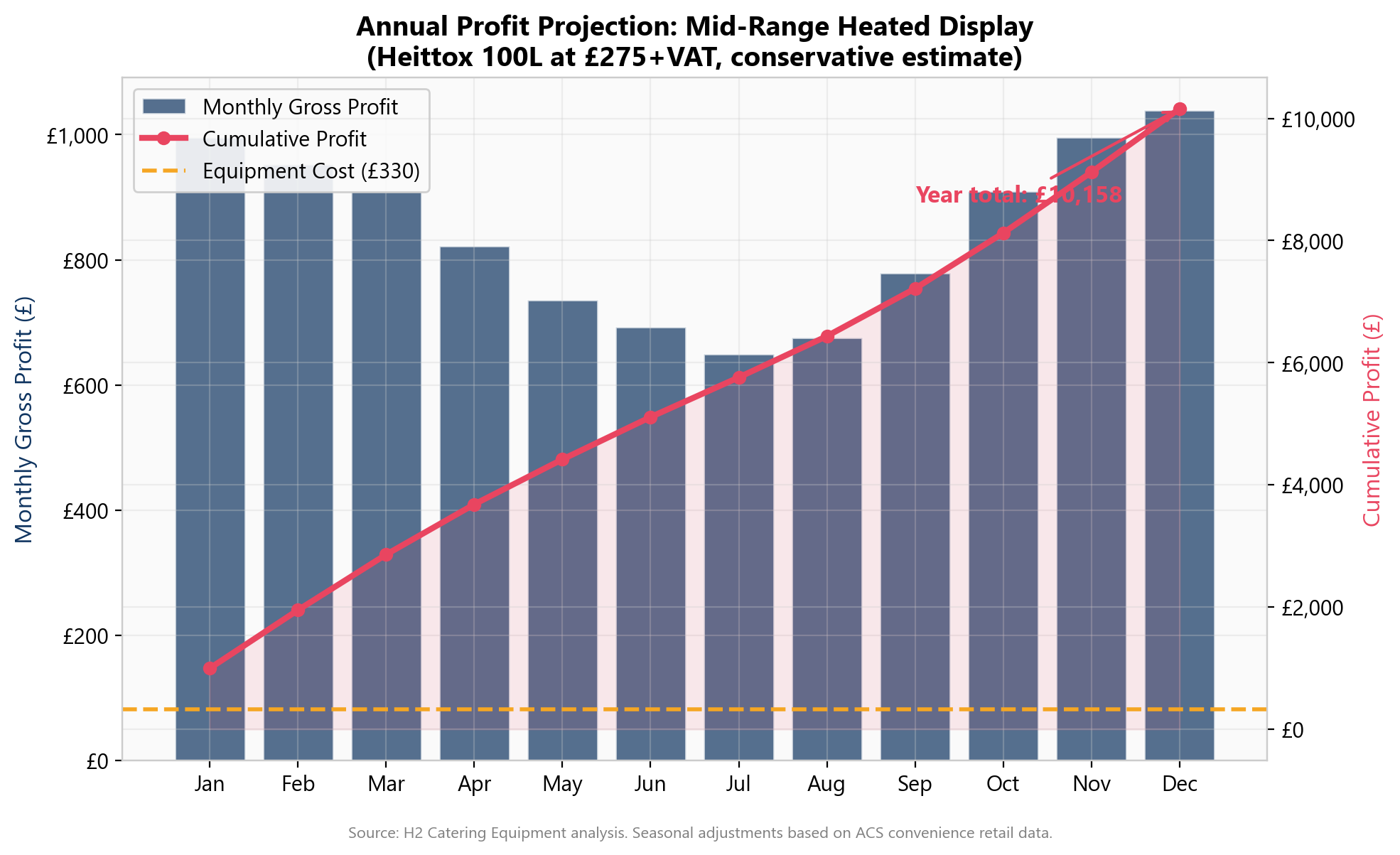
On a conservative estimate of £200 a week in base gross profit, the annual total comes to just over £10,000. The equipment cost of £330 (inc. VAT) is recovered by the third week of January. Everything after that is pure profit contribution.
Even in July, the quietest month, the model shows over £650 in monthly gross profit. There is no month where the equipment sits idle.
The compliance bit: what the EHO will check
Adding hot food to your shop means you need to meet FSA food safety requirements. Environmental Health Officers will inspect you. Here’s what you need to get right from day one.
| Requirement | What This Means for You |
| Hot holding at 63°C or above | Your heated display must maintain food at 63°C minimum. Check with a probe thermometer and record readings daily. |
| 2-hour rule | If food drops below 63°C, you have a maximum of 2 hours to sell it, reheat it to above 63°C, or throw it away. Don’t mix fresh stock with old. |
| Probe thermometer | Buy a calibrated digital probe thermometer (around £15-£25). Use it. Record the results. The EHO will ask to see your records. |
| Food business registration | If you’re not already registered as a food business with your local council, you must do so at least 28 days before you start selling hot food. It’s free. |
| HACCP / Safer Food Better Business | Download the free FSA ‘Safer Food, Better Business’ pack. Fill it in. Keep it up to date. This is your food safety management system. |
| Hand wash basin | You need a dedicated hand wash basin with hot and cold water, soap, and disposable towels. It cannot be the same sink you use for other purposes. |
None of this is difficult. But it does need to be done properly before your first sale. The FSA’s ‘Safer Food, Better Business‘ pack walks you through everything, and it’s free to download from food.gov.uk.
H2 heated display cabinets: the full range
H2 Catering Equipment stocks 20 heated display cabinets, starting from £225+VAT. Here are the models best suited to newsagents and small convenience stores.
| Model | Size (cm) | Price (+VAT) | Best For |
| Infernus XCR35L | 56W x 36D x 30H | £225 | Small countertop, limited space, entry-level |
| Heittox HDT6 Pie Warmer | 64W x 36D x 53H | £250 | Pies, pasties, sausage rolls |
| Heittox 100L HDT6B-1 | 66W x 49D x 65H | £275 | Mixed hot food, higher capacity |
| Infernus FW660 | 66W x 48D x 64H | £325 | Wider range, multi-shelf display |
| Heittox 160L HDT9B-1 | 90W x 49D x 65H | £335 | Larger shops, higher footfall |
| Heittox 200L HDT12B-1 | 120W x 49D x 65H | £395 | High-volume, wide counter space |
| Heittox 300L Bakery HDF9 | 92W x 68D x 121H | £995 | Full bakery display, premium setup |
All prices exclude VAT. View the full range and order online at h2products.co.uk/food-warmers/display-cabinets/
Frequently asked questions
Do I need planning permission to add hot food to my newsagent?
No. You don’t need planning permission to sell hot food from an existing retail premises. You do need to register as a food business with your local council at least 28 days before you start. Registration is free and cannot be refused.
How much electricity does a heated display use?
A typical countertop heated display cabinet uses between 0.8kW and 1.5kW. Running a 1kW unit for 10 hours a day at current electricity rates (around 24.5p/kWh) costs roughly £2.45 per day, or £14.70 a week. That’s a fraction of the profit you’ll generate.
What temperature must I keep hot food at?
63°C or above. This is a legal requirement under UK food safety regulations. If food drops below 63°C, you have a maximum of 2 hours to either reheat it above 63°C, sell it, or dispose of it. You can’t reheat food more than once.
Can I sell hot food without a food hygiene certificate?
There’s no legal requirement for a formal certificate, but all food handlers must be trained in food hygiene. A Level 2 Food Hygiene certificate (available online for around £20-£30) is standard practice and will help you pass your EHO inspection.
What’s the difference between a heated display and a bain-marie?
A heated display cabinet uses dry heat and is designed for grab-and-go items like pies, pasties, and sausage rolls. It keeps food visible and accessible. A bain-marie uses wet heat (steam from a water bath) and is better for holding sauces, soups, and curries. Both maintain food above 63°C.
Where should I place the heated display in my shop?
Near the till. That’s where impulse purchases happen. Customers queuing to pay will see the display and add a hot item to their basket. ACS data shows that till-adjacent food displays generate the highest conversion rates.
Methodology and data sources
This article uses data from the following sources:
- Association of Convenience Stores (ACS) Local Shop Report 2025
- IGD convenience retail basket analysis
- Food Standards Agency (FSA) food hygiene regulations and hot holding guidance
- Ofgem published electricity tariff data for SMEs (2025/26)
- H2 Catering Equipment product catalogue and pricing (March 2026)
Revenue projections are based on conservative footfall estimates for a typical independent newsagent or convenience store. Actual results will vary based on location, footfall, product selection, and pricing. Seasonal adjustments are based on published ACS convenience retail trading data.


